文章: The Art of the Bias Cut : Where Fabric Comes Alive
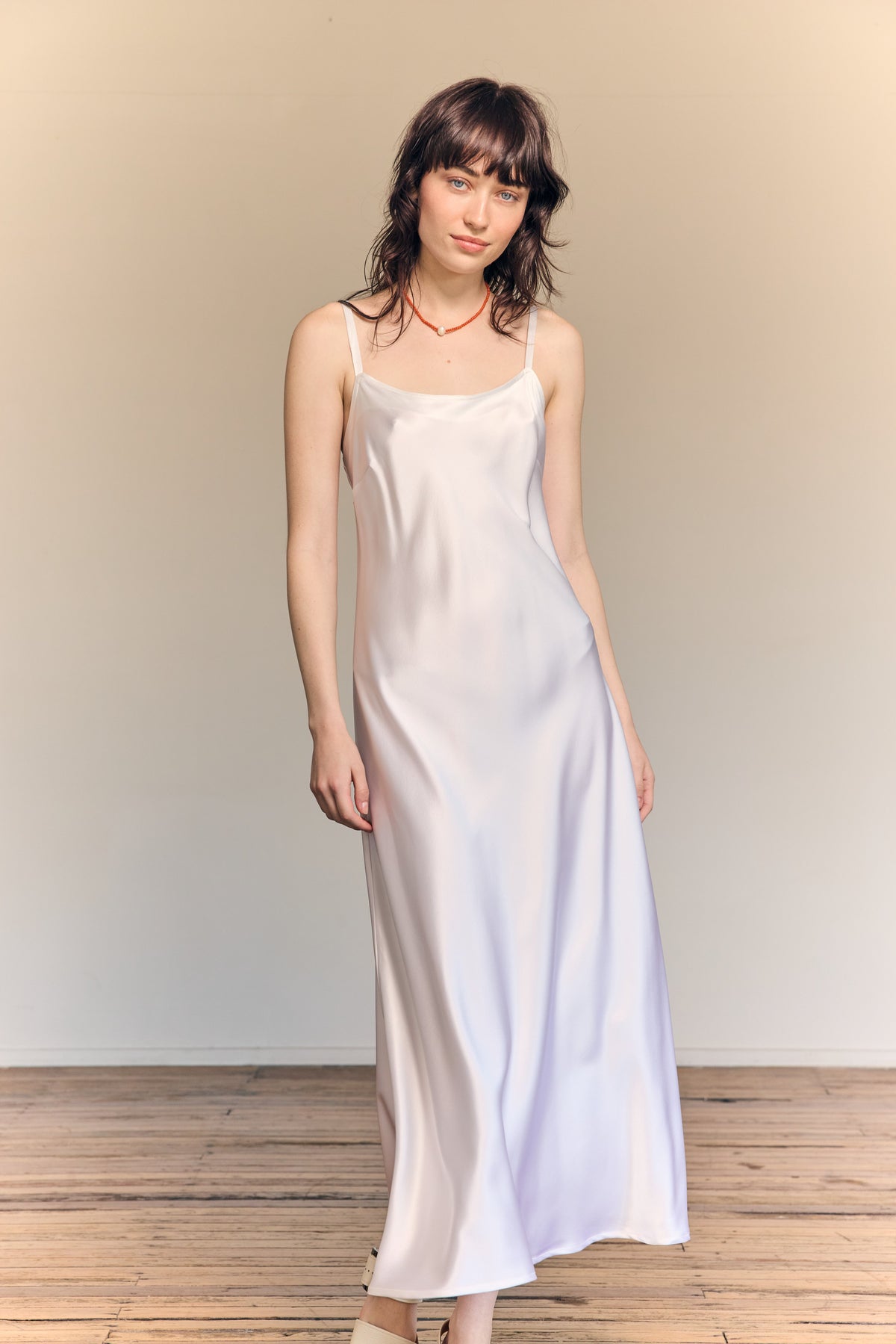
The Art of the Bias Cut : Where Fabric Comes Alive
There is a moment in the studio when a length of silk charmeuse catches the light mid drape, mid movement and reveals something that no straight grain cut could ever accomplish. This is the magic of bias cutting. It's geometry meeting sensuality, mathematics meeting art. And for me, it remains one of the most profound disciplines in fashion design.
At Tengdahl, we have built our reputation on an understanding that fabric is not merely material to be constrained, it is a living partner in style. Nowhere is this partnership more eloquently expressed than in the bias cut.
The Secret language of the Diagonal
The bias cut is elegantly simple in concept: the fabric is sliced at a 45 degree angle to the grain line, rather than along the conventional straight weave. What happens next is where the magic resides. This diagonal approach unlocks something inherent in every woven textile, a natural elasticity and fluid responsiveness that the grain cannot provide.
When you understand the bias cut, you understand that the fabric has layers of personality waiting to be discovered. Cut along the straight grain, silk and linen becomes obedient, controlled, architectural. Cut on the bias that same textile transforms into something almost sentient: it breathes, and moves with your body rather than against it.
This principle is fundamental to how we approach every piece at Tengdahl. Whether we're designing the Coco silk tank for our Spring '26 collection or crafting a fluid evening piece, the question we ask when looking at the textile is "Would bias cut reveal the true beauty of this textile?"
The Feeling of Luxury
This is where technique transcends into philosophy. A bias cut garment doesn't simply sit on the body, it dialogues with it. The fabric skims the curves without clinging, accommodates movement without distorting, and adjusts to your natural contours as if the piece was tailored specifically to you in that moment.
When a client steps into a bias cut Tengdahl piece, whether its one of our signature pieces or a new arrival, I watch their shoulders relax and a smile come to their face. There is an immediate recognition, conscious or not, that this garment has been engineered not to constrain but to liberate. It has the intelligence to give where it needs to, the grace to hold where it matters.
The irony is that the most flattering garments are often the least rigid. The most effortless pieces require the most demanding precision.
The Visual Language of Drape
I think of how a bias cut evening gown moves through a room. The fabric doesn't swing, it flows. Luxury fashion houses understand this intuitively. In 1996 when I first saw the legendary collection by John Galliano, who cut the collection entirely on the bias, it changed the way I wanted to design and inspired me on a whole new direction for the brand. I wanted to design for this new women who wanted to feel free and natural, a new era of the modern women. Authentically herself.
This is precisely what we strive for in every Tengdahl Collection. Our Spring '26 pieces embody this philosophy. Garments that look effortlessly elegant while representing countless hours of considered design and precise construction.
Why Tengdahl commits to the Bias Cut
I have never been interested in forcing fabric into rigid silhouettes or trends that deny the wearer comfort and grace.
Every bias cut piece in the Tengdahl collection represents hours of precision. The technique demands at least 25 percent more fabric than a straight grain. Each seam is carefully considered. Each curve is intentionally placed. The construction methods we employ including couture finishing techniques like French seams to ensure the inside of the garment is as beautiful as the outside.
This commitment is evident in signature pieces like our bias cut silk tanks, bias cut skirts and evening wear. It's the philosophy behind how our Brisbane Arcade studio approaches every garment. This is slow fashion at its most meaningful. Not slow because it takes time, but slow because we don't comprise on quality, craft or integrity.